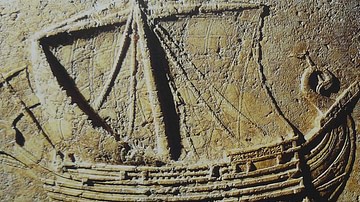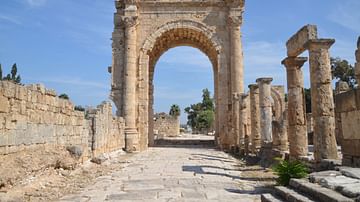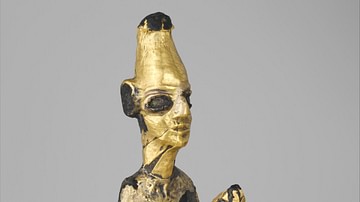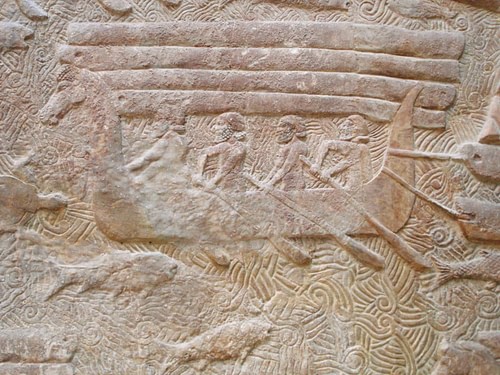
Phoenicia was an ancient civilization composed of independent city-states located along the coast of the Mediterranean Sea stretching through what is now Syria, Lebanon and northern Israel. The Phoenicians were a great maritime people, known for their mighty ships adorned with horses' heads in honor of their god of the sea, Yamm, the brother of Mot, the god of death.
The island city of Tyre and the city of Sidon were the most powerful states in Phoenicia with Gebal/Byblos and Baalbek as the most important spiritual/religious centers. Phoenician city-states began to take form c. 3200 BCE and were firmly established by c. 2750 BCE. Phoenicia thrived as a maritime trader and manufacturing center from c. 1500-332 BCE and was highly regarded for their skill in ship-building, glass-making, the production of dyes, and an impressive level of skill in the manufacture of luxury and common goods.
The Purple People
The purple dye manufactured and used in Tyre for the robes of Mesopotamian royalty gave Phoenicia the name by which we know it today (from the Greek Phoinikes for Tyrian Purple) and also accounts for the Phoenicians being known as 'purple people' by the Greeks (as the Greek historian Herodotus tells us) because the dye would stain the skin of the workers.
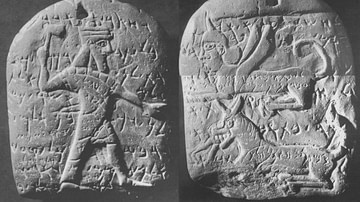
Herodotus cites Phoenicia as the birthplace of the alphabet, stating that it was brought to Greece by the Phoenician Kadmus (sometime before the 8th century BCE) and that, prior to that, the Greeks had no alphabet. The Phoenician alphabet is the basis for most western languages written today and their city of Gebal (called by the Greeks 'Byblos') gave the Bible its name (from the Greek Ta Biblia, the books) as Gebal was the great exporter of papyrus (bublos to the Greeks) which was the paper used in writing in ancient Egypt and Greece.
It is also thought that many of the gods of ancient Greece were imported from Phoenicia as there are certain indisputable similarities in some stories concerning the Phoenician gods Baal and Yamm and the Greek deities of Zeus and Poseidon. It is also notable that the battle between the Christian God and Satan as related in the biblical Book of Revelation seems a much later version of the same conflict, with many of the same details, one finds in the Phoenician myth of Baal and Yamm.
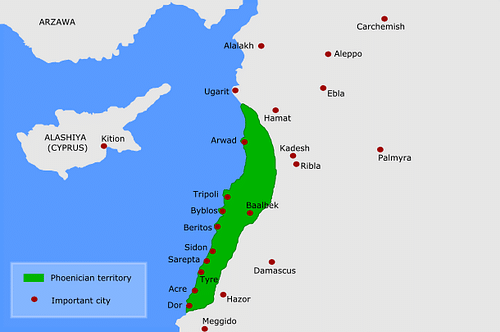
In its time Phoenicia was known as Canaan and is the land referenced in the Hebrew Scriptures to which Moses led the Israelites from Egypt and which Joshua then conquered (according to the biblical books of Exodus and Joshua but uncorroborated by other ancient texts and unsupported by the physical evidence thus far excavated). According to scholar Richard Miles:
[The people of the land] shared an ethnic identity as Can'nai, inhabitants of the land of Canaan yet, despite a common linguistic, cultural, and religious inheritance, the region was very rarely politically united, with each city operating as a sovereign state ruled over by a king (26).
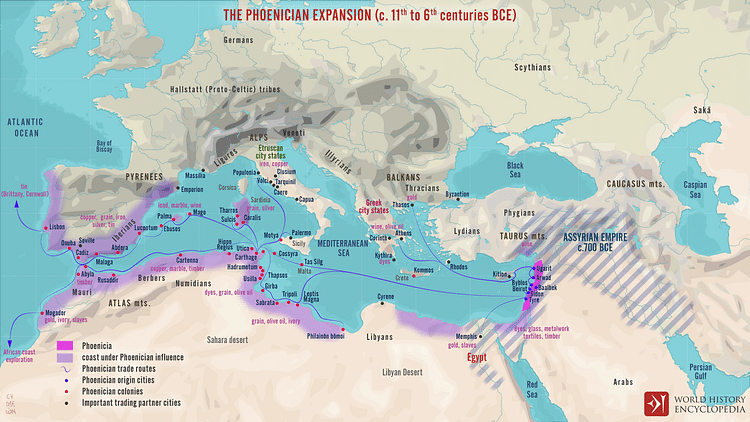
The city-states of Phoenicia flourished through maritime trade between c. 1500-322 BCE when the major cities were conquered by Alexander the Great and, after his death, the region became a battleground in the fight between his generals for succession and empire. Artifacts from the region have been found as far away as Britain and as close as Egypt and it is clear that Phoenician luxury goods were highly prized by the cultures with whom they traded.
Trading Middlemen
The Phoenicians were primarily known as sailors who had developed a high level of skill in ship-building and were able to navigate the often turbulent waters of the Mediterranean Sea. Shipbuilding seems to have been perfected at Byblos where the design of the curved hull was first initiated. Richard Miles notes that:
...over the following centuries, Byblos and other Phoenician states such as Sidon, Tyre, Arvad, and Beirut created an important niche for themselves by transporting luxury goods and bulk raw materials from overseas markets back to the Near East. These new trade routes took in much of the eastern Mediterranean, including Cyprus, Rhodes, the Cyclades, mainland Greece, Crete, the Libyan coast, and Egypt. (28)
However, Phoenician sailors were also known to have traveled to Britain and to Mesopotamian ports.
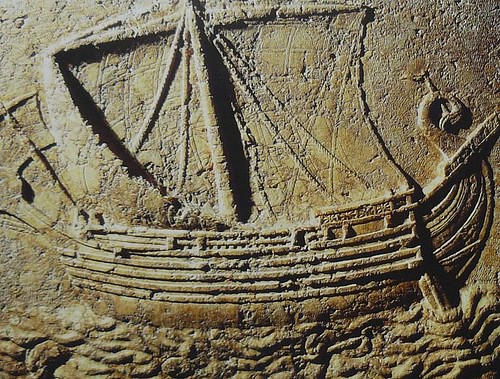
Evidence gathered from Phoenician shipwrecks provide modern-day archaeologists with first-hand evidence of some of the cargo these ships carried:
There were ingots of copper and tin, as well as storage vessels which are thought to have contained unguents, wine and oil, glass, gold and silver jewellry, precious objects of faience (glazed earthenware), painted pottery tools, and even scrap metal. (Miles, 28)
Because their goods were so highly prized, Phoenicia was often spared the kinds of military incursions suffered by other regions of the Near East. For the most part, the great military powers preferred to leave the Phoenicians to their trade but that did not mean there was no envy on the part of their neighbors. The Bible refers to the Phoenicians as the "princes of the sea" in a passage from Ezekiel 26:16 in which the prophet seems to predict the destruction of the city of Tyre and seems to take a certain satisfaction in the humbling of those who had previously been so renowned.
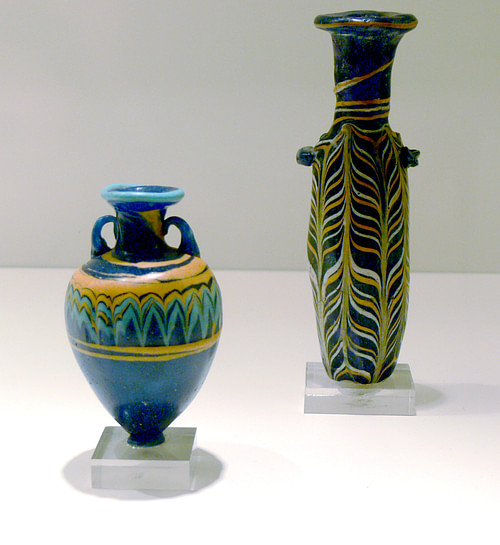
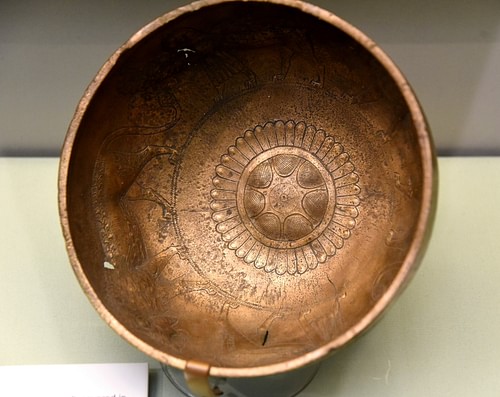
However that may be, there is no doubt regarding the popularity of the goods produced in Phoenicia. So extraordinary was the skill of the artists of Sidon in glass-making that it was thought the Sidonians invented glass. They provided the model for the Egyptian manufacture of faience and set the standard for work in bronze and silver. Further, the Phoenicians seem to have developed the art of mass production in that similar artifacts, fashioned in the same way and in large quantities, have been found in the different regions with which the Phoenicians traded. Miles notes,
Favourite motifs included Egyptian magic symbols such as the eye of Horus, the scarab beetle and the solar crescent, and these were thought to protect their wearers from the evil spirits that prowled the world of the living (30).
The Phoenician purple dye, already mentioned above, became the standard adornment of royalty from Mesopotamia, through Egypt, and up through the Roman Empire. All of this was accomplished through the competition between the city-states of the region, the skill of the sailors who transported the goods, and the high art attained by the craftsmen in the manufacture of the goods.
The competition was particularly keen between the cities of Sidon and Tyre, arguably the most famous of the city-states of Phoenicia who, along with the merchants of Byblos, carried and transmitted the cultural beliefs and societal norms of the nations they traded with to each other. The Phoenicians, in fact, have been called the `ancient middlemen' of culture by many scholars and historians because of their role in cultural transference.
Tyre & Sidon
The city of Sidon (modern Sidonia, Lebanon) was initially the most prosperous but steadily lost ground to her sister city of Tyre. Tyre formed an alliance with the newly formed Kingdom of Israel which proved very lucrative and further expanded its wealth by decreasing the power of the clergy and more efficiently distributing the wealth to the citizens of the city.
Sidon, hoping to form an equally prosperous trade with Israel, attempted to cement trade and alliance through marriage. Sidon was the birthplace of the princess Jezebel who was married to the King of Israel, Ahab, as chronicled in the biblical books of I and II Kings. Jezebel's refusal to relinquish her religion, dignity, and cultural identity to her husband's culture did not sit well with many of his subjects, most notably the Hebrew prophet Elijah who regularly denounced her. Ahab and Jezebel's rule was ended by a coup, inspired by Elijah, in which the general Jehu took control of the army and usurped the throne. Following this, trade relations between Sidon and Israel ceased. Tyre, however, continued to flourish.
Alexander Conquers Phoenicia
In 332 BCE, Alexander the Great conquered Baalbek (re-naming it Heliopolis) and marched on to subdue the cities of Byblos and Sidon that same year. Upon his arrival at Tyre, the citizens followed the example set by Sidon and submitted peacefully to Alexander's demand for submission. Alexander then wished to offer a sacrifice in the holy temple of Melqart at Tyre and this the Tyrians could not allow.
The religious beliefs of the Tyrians forbade foreigners from sacrificing, or even attending services, in the temple, and so they offered Alexander a compromise whereby he could offer sacrifice in the old city on the mainland but not in the temple on the island complex of Tyre. Alexander found this proposal unacceptable and sent envoys to Tyre demanding their surrender. The Tyrians killed the envoys and threw their bodies over the walls.
At this point, Alexander ordered the siege of Tyre and was so determined to take the city that he built a causeway from the ruins of the old city, debris, and felled trees, from the mainland to the island (which, owing to sediment deposits over the centuries is why Tyre is not an island today), and, after seven months, breached the walls and massacred most of the populace.
It is estimated that over 30,000 citizens of Tyre were massacred or sold into slavery and only those wealthy enough to properly bribe Alexander were allowed to escape with their lives (besides those who found a way to escape by stealth). After the fall of Tyre, the other city-states followed Sidon's example and surrendered to Alexander's rule, thus ending the Phoenician Civilization and ushering in the Hellenistic Age.
Roman Phoenicia
By 64 BCE the disassembled parts of Phoenicia were annexed by Rome and, by 15 CE were colonies of the Roman Empire with Heliopolis remaining an important pilgrimage site which boasted the grandest religious building (the Temple of Jupiter Baal) in all of the Empire, the ruins of which remain well preserved to this day. The most famous legacy of Phoenicia is undoubtedly the alphabet but their contribution to the arts, and their role in disseminating the cultures of the ancient world, is equally impressive.