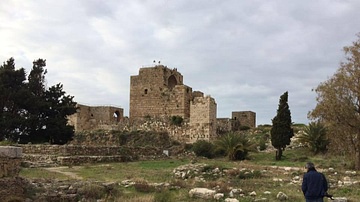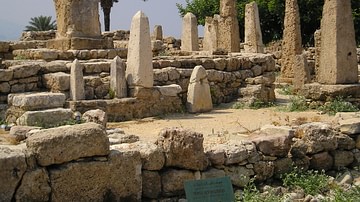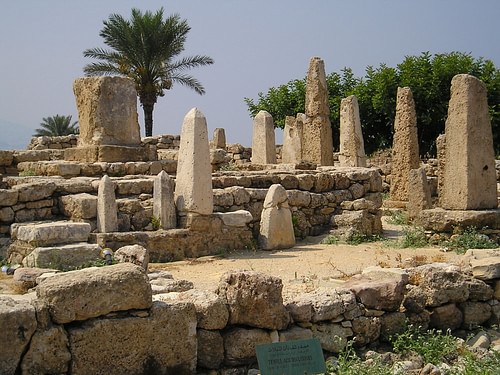
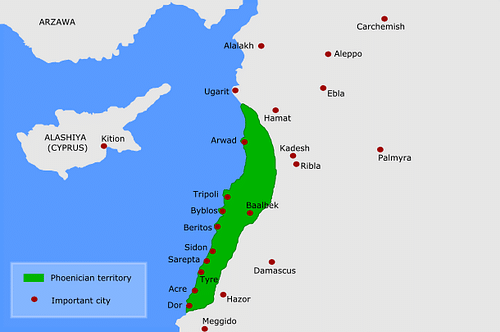
Byblos was the ancient Phoenician port city of Gebal (called Byblos by the Greeks) on the coast of the Mediterranean sea in what is, today, Lebanon. According to the historian Durant, “Byblos thought itself the oldest of all cities; the god El had founded it at the beginning of time, and to the end of its history it remained the religious capital of Phoenicia." Because papyrus was one of the principal articles in its trade, the Greeks took the name of the city as their word for book - biblos - and from their word for books named our Bible - ta biblia - which means 'the books'. Byblos is among the cities listed as candidates for the distinction of 'oldest city in the world' as it has been continuously inhabited for over 7,000 years. Byblos is listed by UNESCO as a World Heritage Site.
Origins
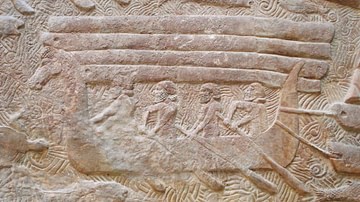
The city began as a small fishing village called Gubal or Gebal while the coastal region of the land, which the Greeks named Phoenicia, was known to the inhabitants as Canaan. By 3000 BCE the little village had grown to a prosperous city through trade. The cedars of Lebanon were highly prized by other countries for use in construction, and Byblos became the single most important shipping port for timber to Egypt and elsewhere. Byblos was also the first city to perfect shipbuilding, and it is largely due to the craftsmanship of the shipwrights of Byblos that Phoenicians acquired their fame as sailors and "princes of the sea" (as they are referred to in the biblical book of Ezekiel). It was primarily through trade with Egypt that Byblos grew so incredibly wealthy. The Egyptians flooded Byblos with material wealth but also with aspects of their culture and Egyptian religion.
In Egyptian mythology, Byblos is cited as the city where Isis located the body of her dead husband Osiris in the trunk of a tree that had grown around him after his murder by his brother Set. The Phoenicians of Byblos also exported their own tales concerning Phoenician religion, and it is thought that the stories surrounding war in the heavens and an eternal battle between a great god of good and another deity of evil grew out of the Phoenician myths concerning the eternal war between Baal (god of the sky) and Yamm (god of the sea). This myth may have come from the Egyptian tale of the war between Osiris' son Horus and the dark god Set or transference may have gone from the Phoenicians to the Egyptians. The tale of the war in heaven related in the biblical book of Revelation bears many similarities to both these much older myths in the same way that there are many motifs in the Bible borrowed by the scribes who wrote it from earlier tales of other cultures. So closely-knit were the ties between Egypt and Byblos that some historians and scholars have claimed that Byblos was almost an Egyptian colony.
Amorite, Hyksos, & Phoenician Byblos
The Amorites burned the city in their invasion of 2150 BCE. After subduing the populace, they rebuilt and settled in the area. Their control of the region ended in 1725 BCE with the invasion of the Hyksos people who ruled until they were driven out by the Egyptians in 1580 BCE. The Egyptians then lay claim to the coast of Canaan.
It is during the period of Egyptian occupation that the Phoenician culture developed arguably their most important contribution to the world: their alphabet of 22 characters which replaced cuneiform in written communication. Through trade, the Phoenician alphabet traveled first to Greece around 800 BCE and then spread to other countries through Greek merchants.
Decline of Byblos
Between 1100 and 725 BCE Byblos declined in importance as its sister city, Tyre, grew. After the conquest of the region by Alexander the Great, and the destruction of Tyre in 332 BCE, Byblos again prospered and became completely Hellenized, adopting Greek culture, dress, and language. During the Hellenistic period (330-64 BCE) Byblos became most famous for the production of papyrus which would give it its Greek name. In 64 BCE the region was conquered by the Roman general Pompey the Great and continued as a Roman colony from 64 BCE to 395 CE. The Romans, as usual, improved upon the city they found, ordering the streets and building large temples, Roman baths, and civic gardens.
After the fall of the Roman Empire, the Byzantine Empire controlled Byblos from 395-637 CE when the Muslim Arab invaders took the region and drove the Byzantines out. Under Muslim rule, Byblos steadily declined in wealth and importance. Now known as the city of Jbail, the Muslims considered it of so little importance that they did not even bother to rebuild the defences they had destroyed in taking the city. The great port was virtually ignored for centuries and provided an easy target for invading Crusaders in 1098 CE during the First Crusade. Once the Crusaders had been driven out, the Muslim rulers continued to neglect the city, busying themselves with rule further inland. Byblos was forgotten for centuries until the work of the French historian Ernest Renan brought the city back to light in 1860 CE.