Arabia

Edit Definition

Definition

The ancient Arabians, or Arabes as they were called by the Hellenes, were a Semitic people. One must note that the Arabians were not just a single people, but that it was divided in multiple smaller kingdoms and tribes. It was home to great city builders and nomads alike. They were of great influence on many occasions in the ancient period.

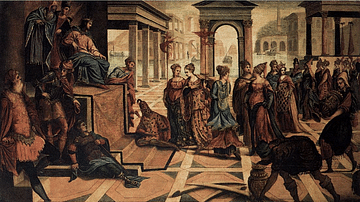
One of the first mentions of Arabs comes from the Bible and the Torah. The table of nations mentions Sheba, Dedan and Qedar. Most known is the famous and legendary rich Queen of Sheba who visited King Solomon, also mentioned in the Qur’an. Sheba is these days identified with ancient Saba, then the leading power in what today is Yemen. It was known for its prosperity, urban centres and magnificent buildings. The Qedar are known from Assyrian records as paying tribute from the 8th century BCE onwards, but also as Assyria's enemies in the annals of Ashurbanipal. The Minaeans, also mentioned in Assyrian records, were famous traders who controlled most of the Red Sea area, and appear to have had close ties with the Egyptians with whom they traded incense. The caravan city of Tayma was also famous before classic ancient history: It was mentioned in the 8th century BCE by the Assyrians for paying tribute and it was the home of the Babylonian king Nabonidus during his elder days.

Other famous Arabian peoples at the time were the Gerrhans, from modern-day Bahrain who appear to have had naval trade connections with India. The other great traders from the North were the Nabataeans. They lived in modern day Jordan and replaced the Qedar as the most powerful political entity of the region. Their capital was Petra, a marvellous city carved out of the rock, famous today as a popular tourist site. The Nabataean kingdom reached its peak in the first century BCE, when it extended from Dedan to Damascus. By 106 CE it became the only Roman Arabian province under the name Arabia Petraea. Yet the richest of all Arabians would have been the Hadramawt, who lived in the southern lands that produced incense.

In the time of the Roman empire much had changed in Arabia. The Minaeans were no longer and the power in ancient Yemen had shifted as well. The Himyar, a tribe from the south, became the leading nation by conquering the whole of Yemen. In the North another famous Arabian queen, Zenobia, came to power. She expanded the Palmyran empire and even conquered Egypt, until she was captured by emperor Aurelian. Gerrha was part of the Sassanid empire by the 4th Century CE.

Written by , published on under the following license: Creative Commons: Attribution-NonCommercial-ShareAlike. This license lets others remix, tweak, and build upon this content non-commercially, as long as they credit the author and license their new creations under the identical terms.

Donate and help us!

We're a non-profit organisation and we need your help! This website costs money and research material isn't cheap either. We are supported only by our donors. Please consider donating; even small amounts help. Thank you!

Peer Review

Are you qualified to peer review ancient history information? Apply now and help provide quality ancient history information on the web!

Articles

Article

The Phoenician Alphabet and Language

by Thamis
published on 18 January 2012
Phoenician is a Canaanite language closely related to Hebrew. Very little is known about the Canaanite language, except what can be gathered from the El-Amarna letters written by Canaanite kings to Pharaohs Amenhopis III (1402-1364 BC) and Akhenaton (1364-1347 BC). It appears that Phoenician language, culture, and writing was strongly influenced by Egypt (which... [continue reading]
Article

Ancient North Arabian

by M.C.A. Macdonald
published on 19 April 2012
In the western two-thirds of the Arabian Peninsula, from southern Syria to Yemen, inscriptions testify to the use of a number of different ancient languages and scripts. In the southwest, these inscriptions may date from as early as the thirteenth century BC and continue up to the seventh century AD, while in central and north Arabia they seem to be concentrated... [continue reading]
Article
Most mental maps of the Roman world center on the Mediterranean basin. At the empire’s heart lies the “Eternal City,” with the edges of this mental map forming the limits of direct Roman political control. This conception of the Roman Empire is not, however, always the most useful way of thinking about the Roman world. Indeed, a Mediterranean-centered... [continue reading]
Article
This overview examines the impact of horsepower on Old World society over the last 6,000 years. Analysis of man’s symbiosis with the domesticated horse necessarily takes the reader to regions remote from urban centers and pays special attention to mobile elements of nomadic society, too often deemed marginal or transitory. The discussion first grapples... [continue reading]
Add Illustration

Illustrations

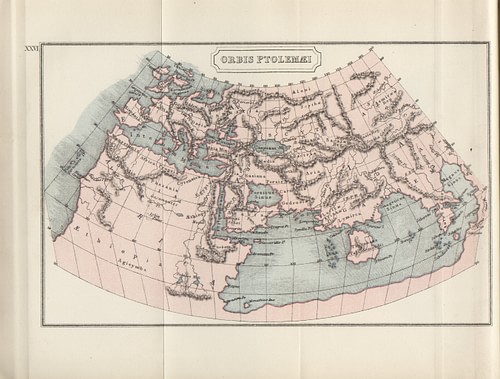
Map of the Ptolemaic World Roman Empire in 117 AD

Interesting Pages

You might also find the following pages interesting...

Related Posts Plugin for WordPress, Blogger...
Recommend Book

Arabia Books


Comments

Please log in or register to post comments. Sadly this is necessary to prevent comment spam. Alternatively, you can use the comments widget below.

Advertisement

Why ads? / Advertise Here
Add Event

Timeline

Visual Timeline
  • 570 CE
    Prophet Muhammad is born.
  • 633 CE
    The recorded prophecies of Muhammad are published as the Qu’ran.
  • 637 CE
    Aleppo is conquered by Khalid ibn al-Walid.
  • 638 CE
    Arabs capture Jerusalem.